Jungle Mahal (2023-Ongoing)


Jungle Mahal is a visual inquiry into the layered landscapes of Purulia, shaped by the belief that Maati–Manush (terrain and body) embeds memory. Dubbed the “palace of forest” by colonial administrators, this region became ground for one of modern India’s earliest resistances to colonial rule. The project responds to these counter-narratives embedded in the region’s fabric and seeks to build a vocabulary of resistance.
At the heart of this body of work is Chhau, a traditional dance form rooted in martial practice. I reimagine Chhau not through its theatrical spectacle but as an embodied archive of guerrilla practice. Derived from the word Chhauni (military camp), Chhau developed as a movement language practiced by local militias during skirmishes with the colonial forces.
Wrapped in histories of colonial and state-led mineral extraction and large hydroelectric interventions, these forces have altered the ecology and lived realities of Purulia. By imagining Chhau to these origins, Jungle Mahal reads the performer’s body as both method and subject, offering a means to understand the landscape’s social and ecological tensions.
Working on site, I developed an alternative printing method called Ferro-Botanical prints, a contact printing process that turns materials tied to the land’s degradation into agents of narration. Palash flower extracts, a symbol of local pride, react with iron salts and reveal images through its own organic emulsions. Allowing elemental processes to produce the image lets the materials of extraction tell their own story. The final work is a meeting point where image, body, and land stand as co-equal witnesses.
Ultimately, the project responds to how terrain and body trace memory, carrying within them subtle and often subconscious forms of resistance that continue to refuse erasure.
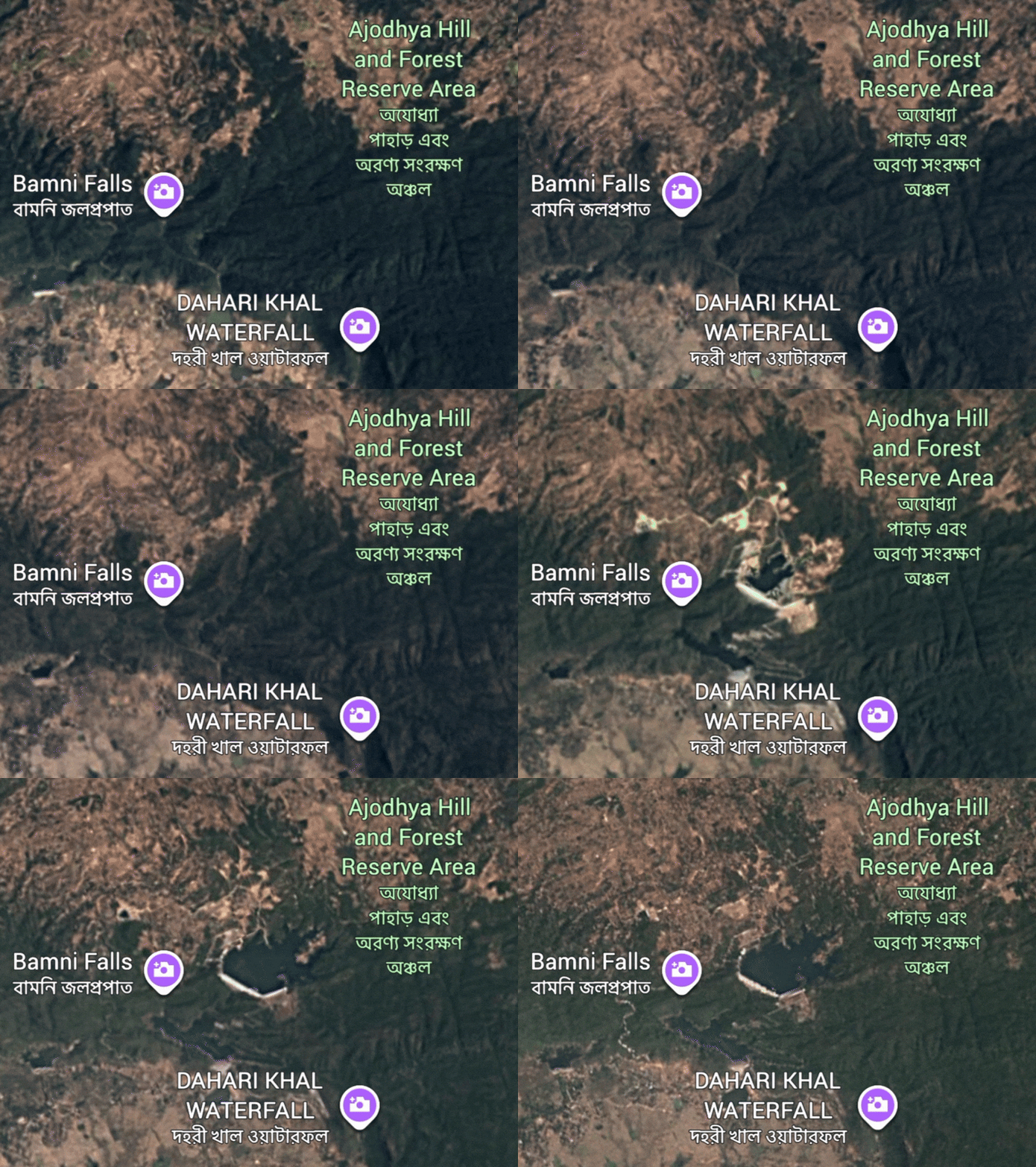
Construction of the Upper and Lower Dam under the Purulia Pumped Storage Program (PPSP), as it took over hillside Ajodhya where once villages and a thriving ecosystem existed.
Source : Google Earth


Chhauni
This series traces Chhau to its origin in Chhauni, the military camp, where body and terrain embed memory into one another. The dancers are photographed only through reflection. The surface interrupts clarity and refuses spectacle.
Chhau is often framed as folkloric performance. Here it is approached as embodied practice shaped by histories of land defense and guerrilla movement. The gestures carry the imprint of terrain. Leaps, turns, and martial stances function as a vocabulary formed through repetition and survival.
Jungle Mahal (Organic)


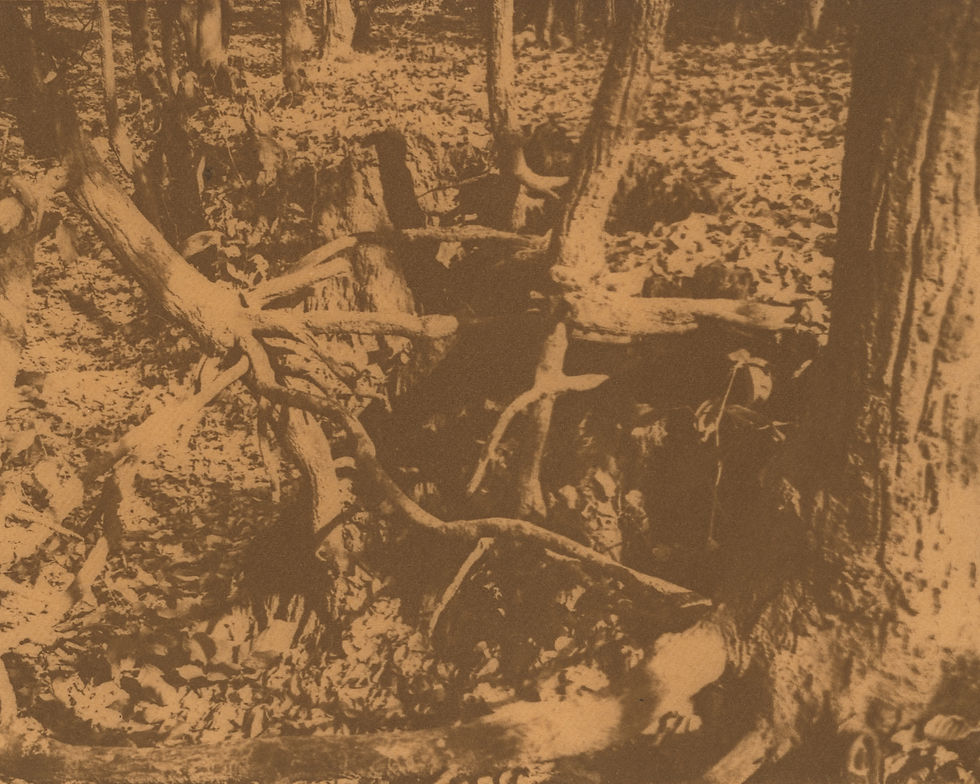
Working in the region, I developed my own alternative printing method, Ferro-Botanical prints—a process that transforms the very materials linked to the land’s degradation into agents of narration. The interplay between the Palash flower, a symbol of pride, and iron, a material linked to the region’s destruction, is then revealed in images through its own organic emulsion.